Shopping Cart
There are no more items in your cart
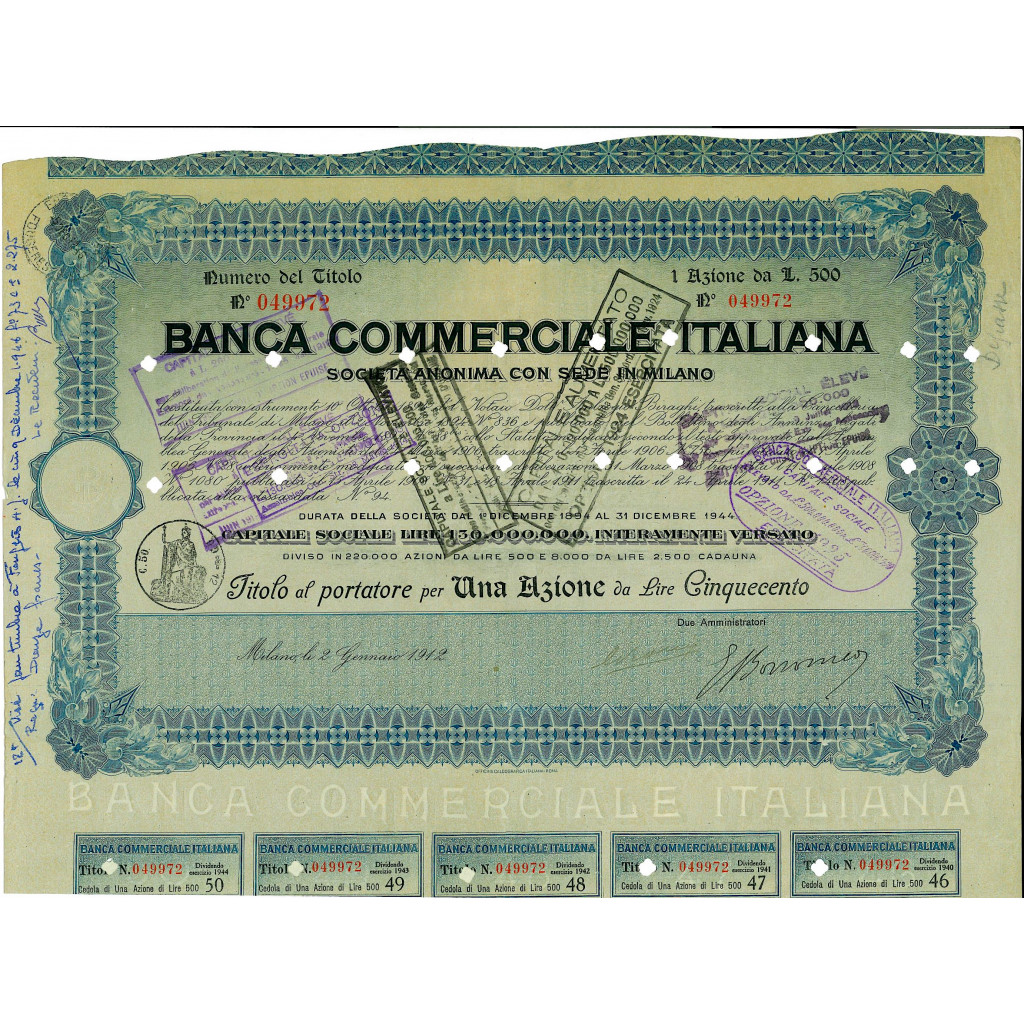
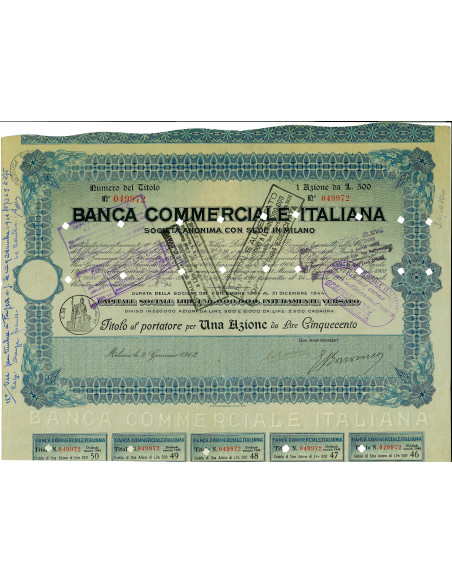
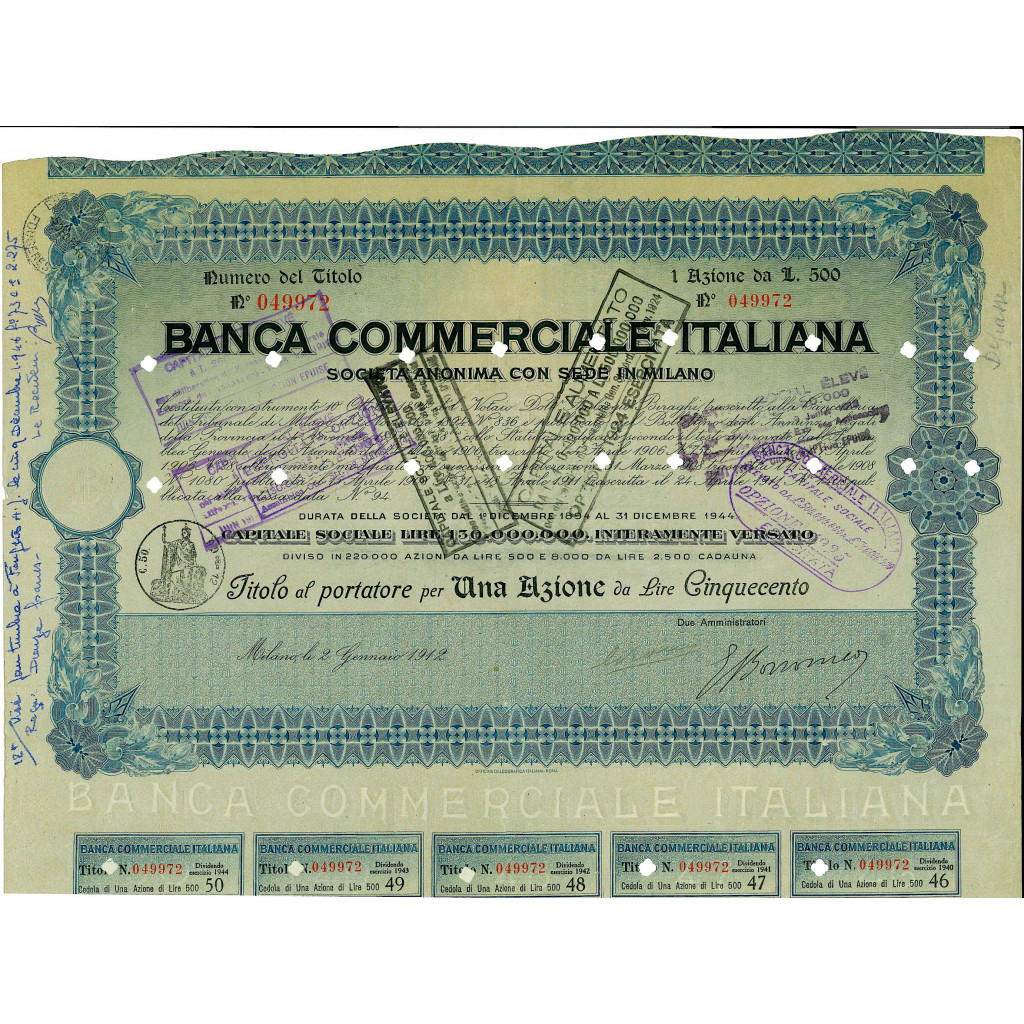
It was founded in Milan on 10 October 1894 on the initiative of a consortium of German (Deutsche Bank, Dresdner Bank, Bank fuer Handel und Industrie, Bleichröder, Oppenheim and Berliner Geselshaft), Austrian (Anglo-Oesterreichische Bank, Wiener Bank and Osterreichische Creditanstalt) and Swiss (Schweizerische Kreditanstalt and Chemin de Fer du St.Gothard) banks, and the French Banque de Paris et des Pays-Bas.
It was presided over by Count Alfonso Sanseverino Vimercati and managed by its first directors, the Germans Otto Joel and Federico Weil, according to the mixed-universal bank model, widespread in Germany, which provided credit mainly to large industrial enterprises.
The bank supported the country's new industrial structure by raising risk capital for the main sectors (steel-mechanics, electricity, chemicals, transport, textiles). Branches were opened throughout the country, starting with the large centres. At the same time, it extended its operations to the international market, through a network of branches and subsidiary banks: in 1910, together with Paribas, it founded the Banque Française et Italienne pour l'Amérique du Sud (Sudameris), based in Paris but active in Latin America, while in the following years, the first branches abroad were opened (in 1911 in London and in 1918 in New York).
After the First World War, Comit contributed to the post-war reconversion of the production apparatus. In the course of the 1920s, led by the Polish-born banker Giuseppe Toeplitz, the bank became increasingly involved in the financing of large industrial groups, in many cases becoming their majority shareholder, while it maintained an attitude of prudent autonomy with regard to the Fascist regime. During the same period, Comit continued its expansion abroad, especially in Central, Eastern and Balkan Europe, as far as Turkey and Egypt.
The post-war crisis after the First World War and the even more serious crisis of 1929 severely tested the structure of all the universal banks, which were unbalanced in their participation in the risk capital of the large companies to which credit was granted. Comit itself was no exception: in 1934 it was nationalised and became the property of IRI under whose control it remained until 1994, when it was privatised.
The new managing directors Raffaele Mattioli and Michelangelo Facconi and the young director Giovanni Malagodi carried out a radical organisational reform, introducing mechanisation processes, redefining customer development activities and modernising the routines for studying credits and assessing the profitability prospects of companies.