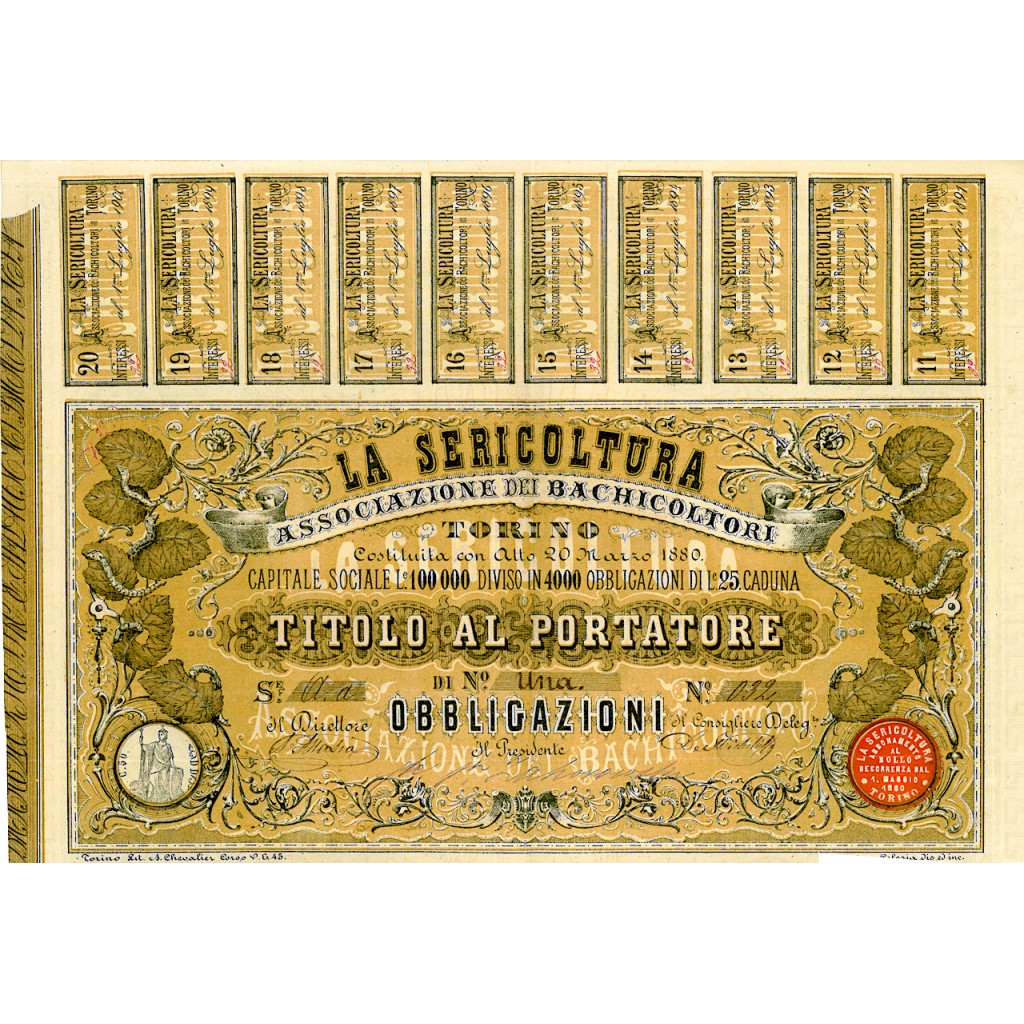
The silkworm (or sericulture) is the breeding of the silkworm (Bombix mori) for the production of cocoons from which the silk thread is obtained.
Etymology
The term "breeding" means "silkworm cultivation". Sericoltura, on the other hand, derives from the Latin "sericus", silk, from which the Italian term sericite, a widespread mineral in the East, with a brightness equal to that of silk, will derive.
History
Silkworm breeding begins to be practiced in China, probably as early as the 7th millennium BC Legend has it that its birth is due to Empress Xi Ling Shi, wife of Emperor Huang Di: it was she who noticed the silky filament, after a cocoon accidentally fell into her cup of hot tea. For millennia it was a secret process, in order to maintain the Chinese monopoly of silk production. Despite this, in later times, there have been escapes into the art of silk production to Japan, Korea and India.
Europe
In Europe, although the Roman Empire knew and appreciated silk, the knowledge of sericulture came only around 550, through the Byzantine Empire; legend has it that monks under the orders of Emperor Justinian were the first to bring some silkworm eggs hidden in the hollow of some reeds to Constantinople.
The 12th century
From the twelfth century, Italy was the largest European producer of silk, a record that was contended for by the Lyon area in France in the seventeenth century. [No source] The breeding of silkworms was an important income supporting the agricultural economy and the production and trade of fabrics, together with that of wool, a very profitable industry, which gave wealth and power to the guilds that practiced the Silk Art in Florence. With the industrial revolution the silkworm cultivation had a great development, above all in the north of Italy, to supply the nascent industrial spinning of raw materials. The silkworm was imported by the Chinese into Europe and China is still the largest producer of silk.
The Italian decline
The production of cocoons in Italy began to decline in the period between the two world wars until it disappeared after the last, due to two factors: the production of synthetic fibers and the change in agricultural organization, where breeding of the bugs was entrusted to the individual peasants and sharecroppers especially to women and children. With urbanization and industrialization, foreign competition became unsustainable.
Today the silkworm rearing in Italy has practically disappeared, few companies breed bugs for a small artisan niche production or as an educational example. The specialized section for the silkworm breeding of Padua is noteworthy.