Shopping Cart
There are no more items in your cart

Document Features
-
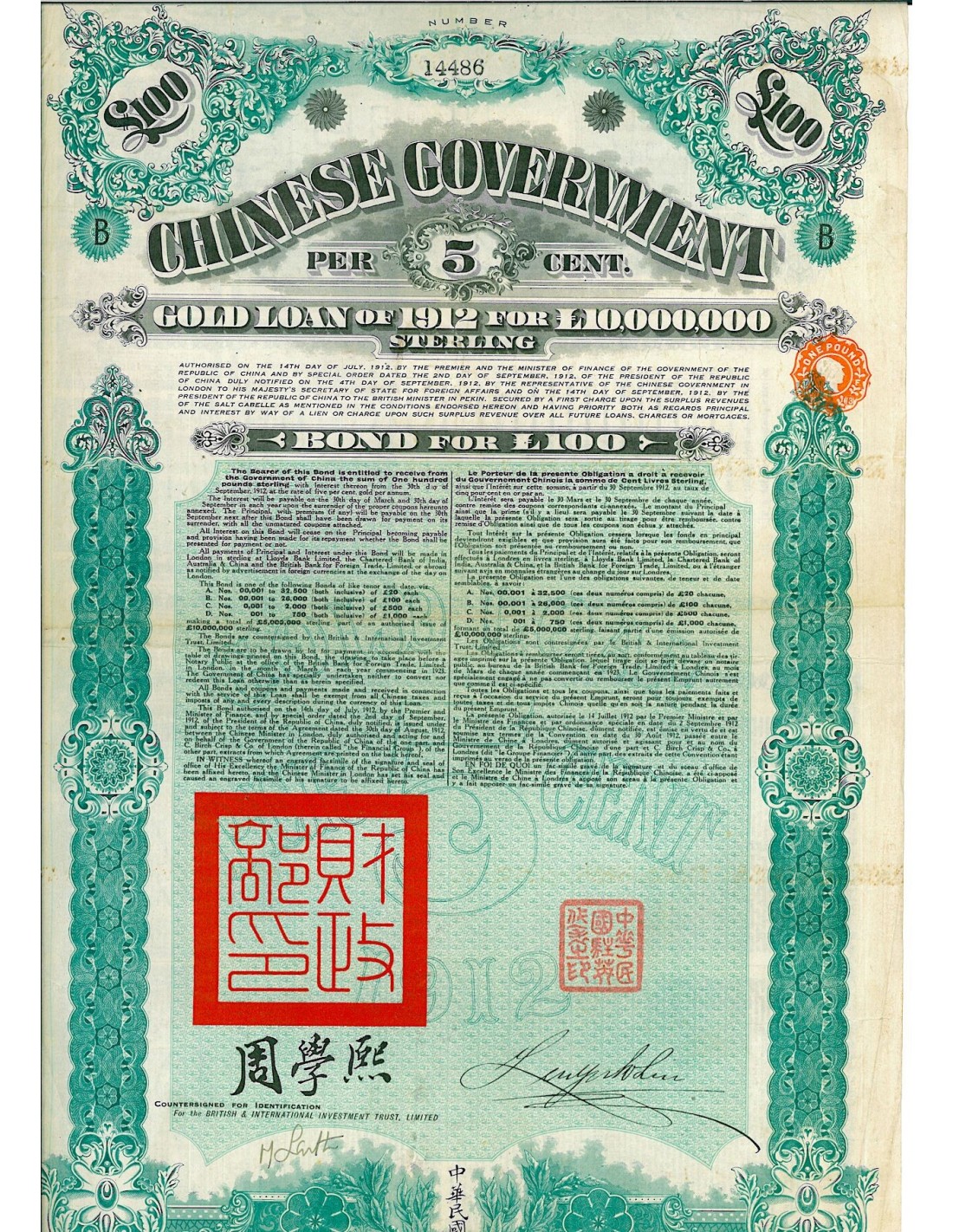
Languages: The bond is written in both English and Chinese, indicating its use in international markets and its appeal to both Western and Chinese investors.
-
Interest Rate: The bond offers a 5% annual interest rate, which was a common rate for government bonds during that era.
-
Loan Value: The total value of the loan is £10,000,000, with individual bonds issued for £100 each.
-
Design and Symbolism:
- Green and Red Colors: The document features prominent green borders and a red seal, symbolizing prosperity and authority in Chinese culture.
- Ornate Patterns: The decorative elements, including floral and geometric patterns, reflect the aesthetic values of the period.
- Official Seals: The bond is marked with several official seals and signatures, adding authenticity and legal validity to the document.
-
Administration:
- The bond is signed by key officials from the Chinese government and representatives from the British & International Investment Trust, Limited, underscoring the international nature of the loan.
-
Terms and Conditions: The bond includes detailed terms and conditions in both English and Chinese, outlining the rights of the bondholder and the obligations of the Chinese government.
Historical Context of the Chinese Government 5% Gold Loan of 1912
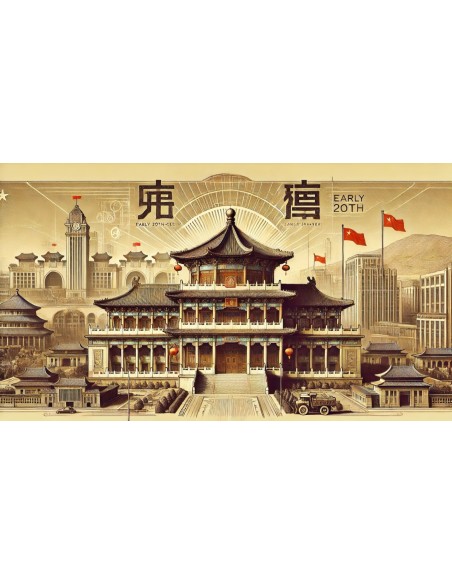
In the early 20th century, China was undergoing significant political and social changes. The fall of the Qing Dynasty in 1911 and the establishment of the Republic of China led to efforts to modernize the country's infrastructure and economy. The Chinese Government sought international loans to finance various development projects, including railways, industrial facilities, and urban infrastructure.
The 5% Gold Loan of 1912 was part of these efforts. Issued in the international financial markets, it aimed to attract foreign investment to support China's modernization plans. The loan was secured against government revenues and guaranteed by the Chinese government, providing assurance to investors.
Conclusion
This bond is not just a financial instrument but a historical artifact that sheds light on China's early 20th-century efforts to integrate into the global economy and modernize its infrastructure. Collectors and historians value these documents for their historical significance and their role in the economic history of China.
La Repubblica di Cina o Repubblica cinese fu l'entità politica che si costituì in Cina alla caduta dell'ultimo imperatore della Cina, Pu Yi nel 1912 in seguito al successo della Rivoluzione Xinhai.
La bandiera della Repubblica di Cina fino al 1928, usata dal Governo Beiyang dei signori della guerra
In seguito a una serie di eventi nel periodo compreso tra il 1912 e il 1949 il territorio sotto il controllo della Repubblica di Cina si ridusse all'isola di Taiwan, mentre la Cina continentale passò sotto il controllo della neonata Repubblica Popolare Cinese. A questa vera e propria rivoluzione negli anni sessanta ne fece seguito una seconda, passata alla storia come grande rivoluzione culturale cinese.
La Repubblica Popolare Cinese fu fondata da Mao Zedong il 1º ottobre 1949 e la prima attività del nuovo sistema politico, stabilitosi con la vittoria rivoluzionaria, fu quella di riportare sotto la sovranità della Cina territori periferici quali il Tibet e lo Xinjiang (1951).
Tutti i documenti storici in vendita si intendono da collezione. I documenti non hanno nessun valore economico o finanziario (no economic or financial value).