
Shopping Cart
There are no more items in your cart

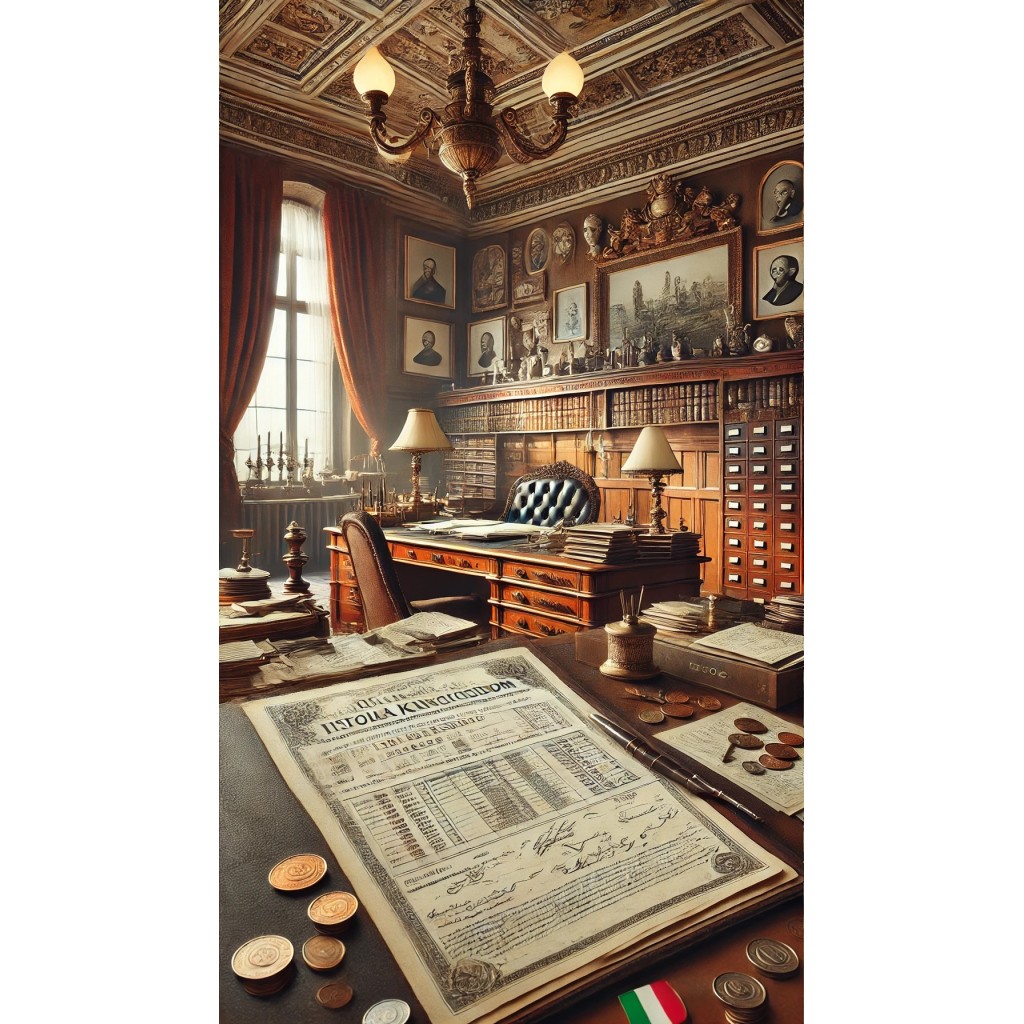
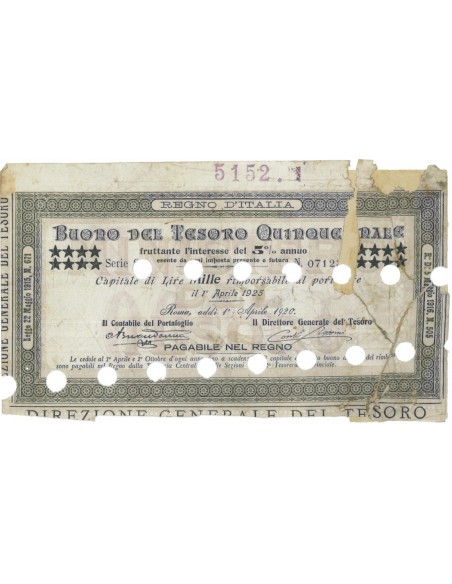


In the historical context of the Kingdom of Italy, the Five-Year Treasury Bond with a 5% interest rate was a financial instrument issued in 1920 with a maturity date of April 1, 1925. This redeemable five-year bond, offering a 5% annual interest rate, was aimed at investors and citizens of the Kingdom, providing a secure opportunity for those holding capital in Italian lira.
The bond was issued shortly after World War I (1914-1918), a conflict that had deeply shaken European economies, including Italy’s. The public debt had skyrocketed, and the Kingdom of Italy needed to cover the expenses of rebuilding the country. The primary goal was to stabilize the financial situation and consolidate the public debt through the issuance of such bonds.
Historical Context of the Issuance
In 1920, Italy was experiencing a period of intense social and economic tensions. The post-war era saw the rise of trade union movements and growing political instability. The industrialization of the country was progressing slowly, and the Italian government needed resources to support reconstruction and economic stabilization. Treasury bonds were one of the strategies used to cover the budget deficit and reduce the public debt accumulated during the war.
Rising inflation and the crisis in the agricultural sector, still significant for the Italian economy, had created difficulties for both the population and the state's finances. Despite these challenges, treasury bonds were viewed as secure investment tools since they were guaranteed by the government. Internationally, the economic competition among European powers was reflected in financial policies, and Italy sought to maintain the trust of markets and citizens.
Characteristics of the Bond
| Feature | Description |
|---|---|
| Issuance | Kingdom of Italy, General Treasury Office |
| Issue Date | April 1, 1920 |
| Maturity Date | April 1, 1925 |
| Interest Rate | 5% per annum |
| Nominal Value | 1000 lira |
| Serial Number | N. 07123 |
| Coupons | Payable on April 1 and October 1 |
| Tax Exemption | Exempt from all present and future taxes |
| Signing Authorities | General Director of Treasury Conte Rosini |
| Design | Unknown artist, floral decorations |
| Printer | State Printing Office |
| Condition of the Bond | Perforated, worn at edges, aged paper |
| Conservation Status | Good but with signs of wear |
Historical Data of the Issuer (Kingdom of Italy)
| Detail | Information |
|---|---|
| Year of Constitution | 1861 |
| Headquarters | Rome |
| Year of Stock Exchange Admission | 1861 |
| Initial Share Capital | N/A |
| Last Known Share Capital | N/A |
| Year Delisted from Stock Exchange | N/A |
| Year of Dissolution | 1946 (with the birth of the Italian Republic) |
Evaluation and Rarity
These Treasury Bonds are relatively rare. The rarity of this document can be considered medium in the world of scripophily, as many issues from this period were redeemed or destroyed. Compared to other bonds issued in the same period, this one stands out for its relatively high-interest rate, a sign of the economic challenges Italy faced during the post-war period.
Importance for Collectors
Scripophily offers a unique glimpse into the economic and financial history of a country. These documents not only represent a bygone era but also tell the story of economic policies, wars, and financial markets that shaped nations. Collecting a Treasury Bond like this can be a great addition for those who want to preserve a piece of Italian history, in addition to being a perfect gift for history and finance enthusiasts, or for decorating offices or studies with a touch of historical elegance.
All historical documents for sale are for collection purposes only. The documents have no economic or financial value (no economic or financial value), the images that are not of the historical document are representative of the company's object and the reference historical period and are not provided, but can be freely downloaded from the website and printed.

