Shopping Cart
There are no more items in your cart

- The photo shows local people in traditional .jpg)
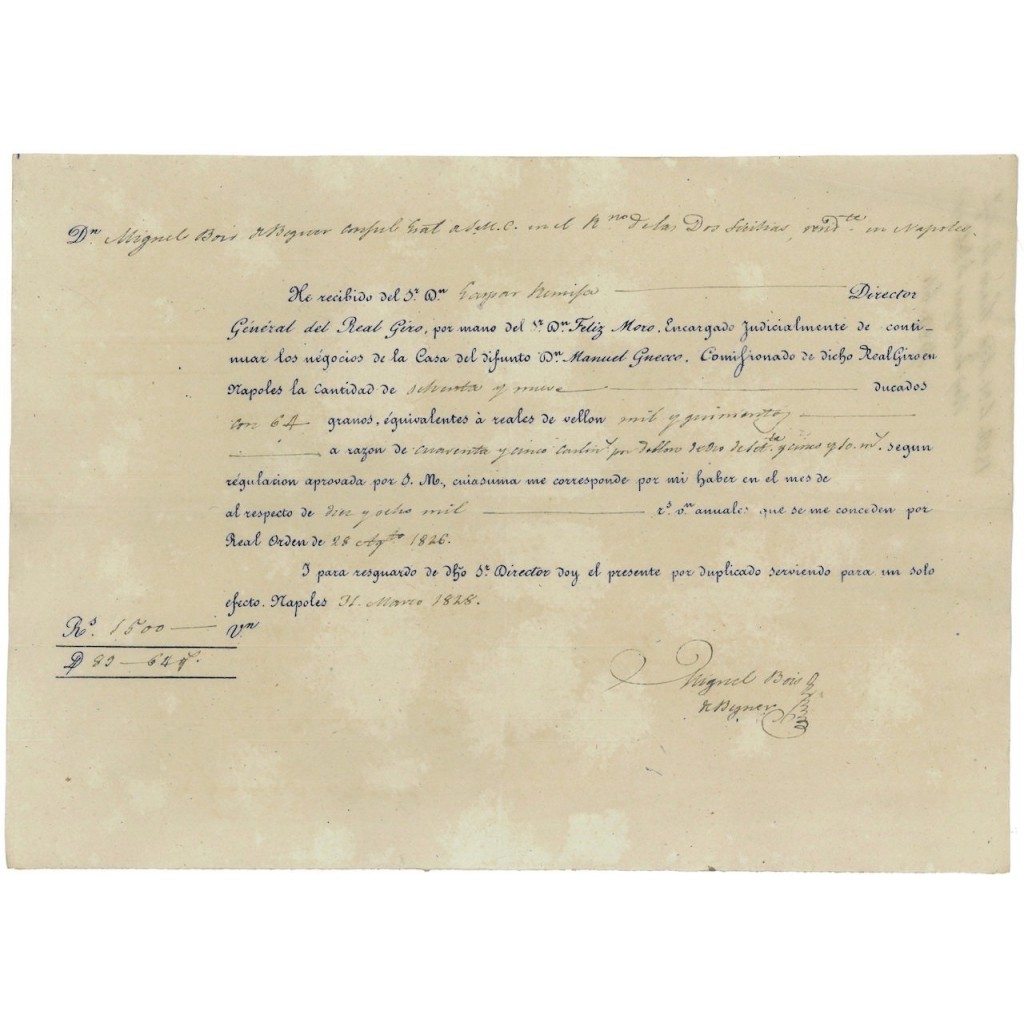
The Real Giro was one of the main financial institutions of the Kingdom of the Two Sicilies, headquartered in Naples, and played a crucial role in managing both public and private finances. This banking institution was established in 1702 with the aim of serving as a clearinghouse for commercial transactions and facilitating financial operations within the Kingdom. The document presented here, dated March 31, 1828, is a receipt issued by the Director General of the Real Giro, confirming the receipt of a significant sum of money for the continuation of a commercial house's business.
This receipt represents an important testimony of the financial and commercial activity of the time, showing how the Real Giro was central to the transactions of large sums of money and in regulating the economic activities of the Kingdom. The document is written in Spanish, a sign of the Bourbon influence and control over Naples and its institutions.
Historical Context
In 1828, the Kingdom of the Two Sicilies was under the rule of Francesco I of Bourbon, a period characterized by relative political stability after the turmoil of the Napoleonic era. However, the Kingdom's economy was facing significant challenges, including the need to modernize infrastructure and stimulate industry. The Real Giro was one of the financial instruments used by the government to support these initiatives, acting as an intermediary in commercial transactions and as a guarantor for loans.
The importance of the Real Giro in the economic context of the Kingdom of the Two Sicilies cannot be underestimated. It not only facilitated exchange operations and commercial transactions but was also involved in managing public debt and monetary regulation. The document in question is therefore a window into an era where control of public finances was essential for maintaining social and political order.
Historical Data of the Real Giro
| Year of Establishment | Headquarters | Year of Company Dissolution | Capital at Establishment | Capital at Dissolution |
|---|---|---|---|---|
| 1702 | Naples, Kingdom of the Two Sicilies | 1860 | Not available | Not available |
Document Characteristics
| Date of Issue | Amount Registered | Language | Signature | Condition | Dimensions |
|---|---|---|---|---|---|
| March 31, 1828 | 79,045 ducats | Spanish | Director of the Real Giro | Good | 21 x 29.7 cm (about A4) |
Rarity and Valuation
This 1828 document is rare, particularly valuable to scripophily collectors for its provenance and its connection to one of the most important financial institutions of the Kingdom of the Two Sicilies. Its condition makes it even more desirable.
The Importance of Scripophily Collecting
Collecting historical documents like this not only offers a unique opportunity to own a piece of history but also allows for a deeper understanding of the economic and social dynamics of the past. These documents, with their signatures, seals, and typographical details, are true works of art that tell the stories of a bygone era. By displaying them in personal or professional spaces, collectors can create a tangible connection to history.
These historical documents are perfect for personal collecting but can also be used as highly valuable gifts, unique decorations, or decorative elements that combine history and art.
All historical documents for sale are considered collectible items. The documents have no economic or financial value (no economic or financial value), images that are not the historical document are representative of the company's object and the historical period of reference, they are not provided but can be freely downloaded from the website and printed.
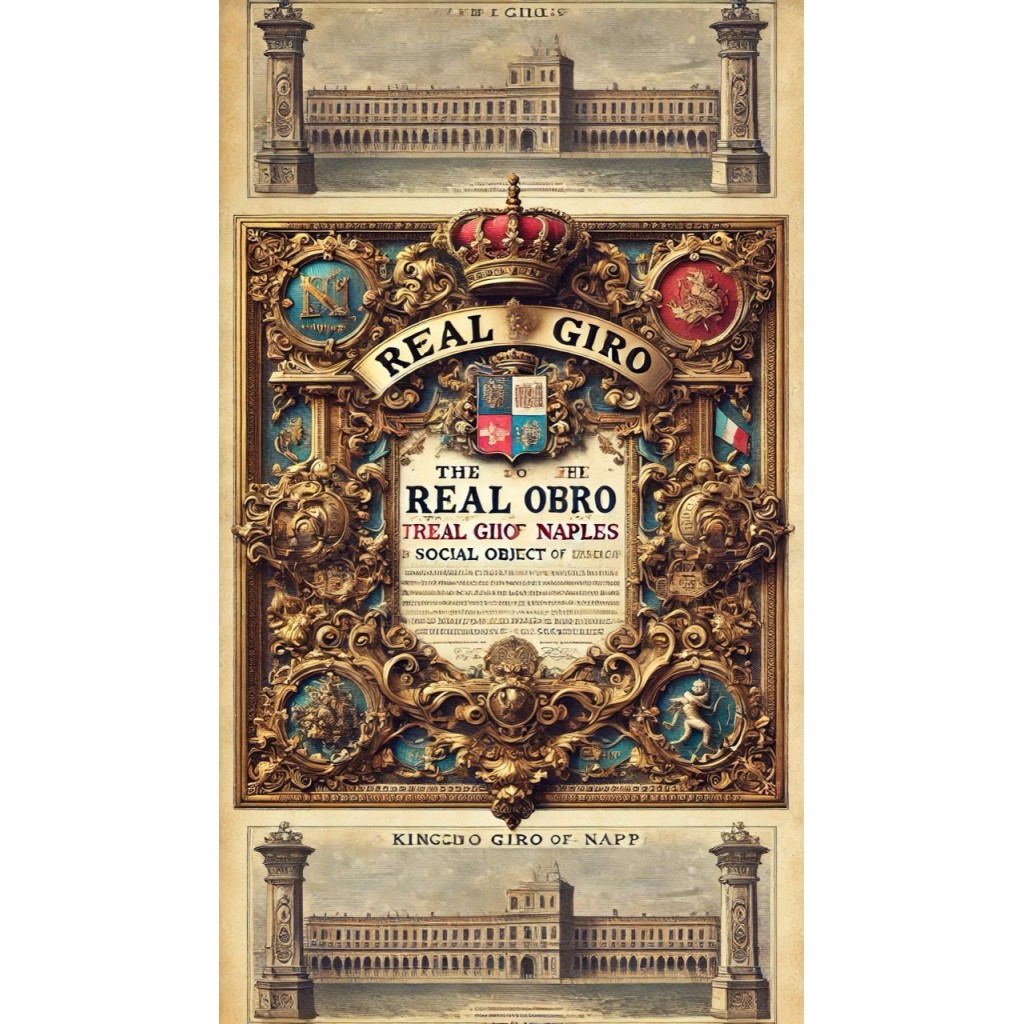
Prompt per Generare l'Immagine
Create a vertical image that represents the social object of the Real Giro of Naples within a historical title frame, featuring elaborate decorations such as intricate borders, fine typography, and the heraldic symbols of the Kingdom of the Two Sicilies. The image should evoke a sense of historical importance and authority, incorporating elements like classic text styles, period-specific colors, and a rich, textured background. The frame should be ornate, with detailed engravings reflecting the artistic style of the early 19th century.